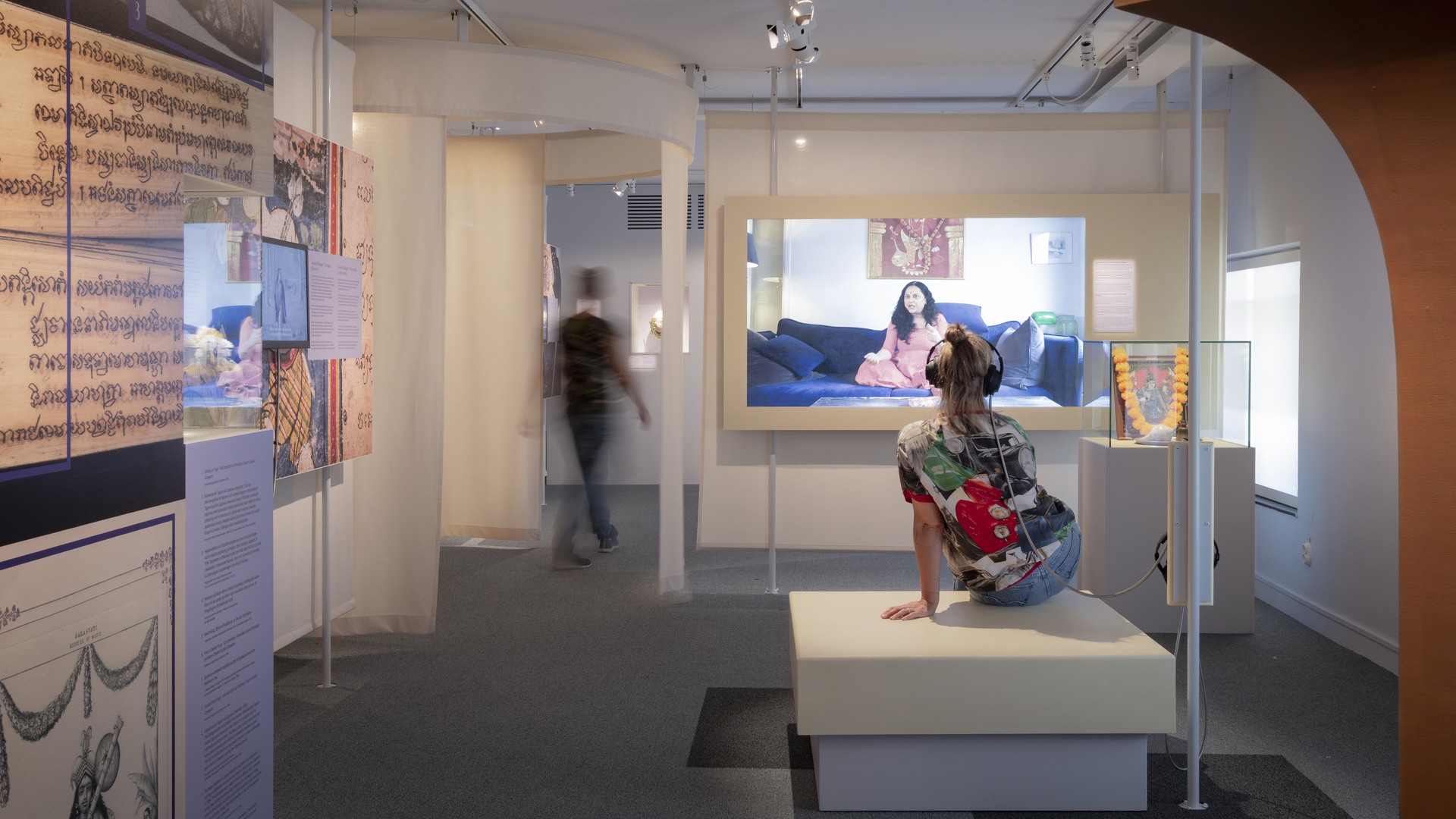
For some, a tradition is a link to a place or a story. For others, it has become an integral part of life in Sweden. Some things can change significantly and still retain their essence. Others can take on a whole new meaning when passed on to a new generation.
Through four themes – Muay Thai, yoga & meditation, food culture and Indian dance – you’ll encounter different experiences of how Asian cultural traditions live on in Sweden. Here you’ll find stories about identity, belonging, family and everyday life, but also about how culture changes when it encounters new contexts.
Traditions can take many different forms. Muay Thai can involve training and competition, but it can also carry stories and traditions from Thailand. Yoga and meditation can be part of spiritual traditions, but they can also be practised for health, recovery and focus. Food and dance can evoke memories, create a sense of community and bring people closer to a history that spans several generations.
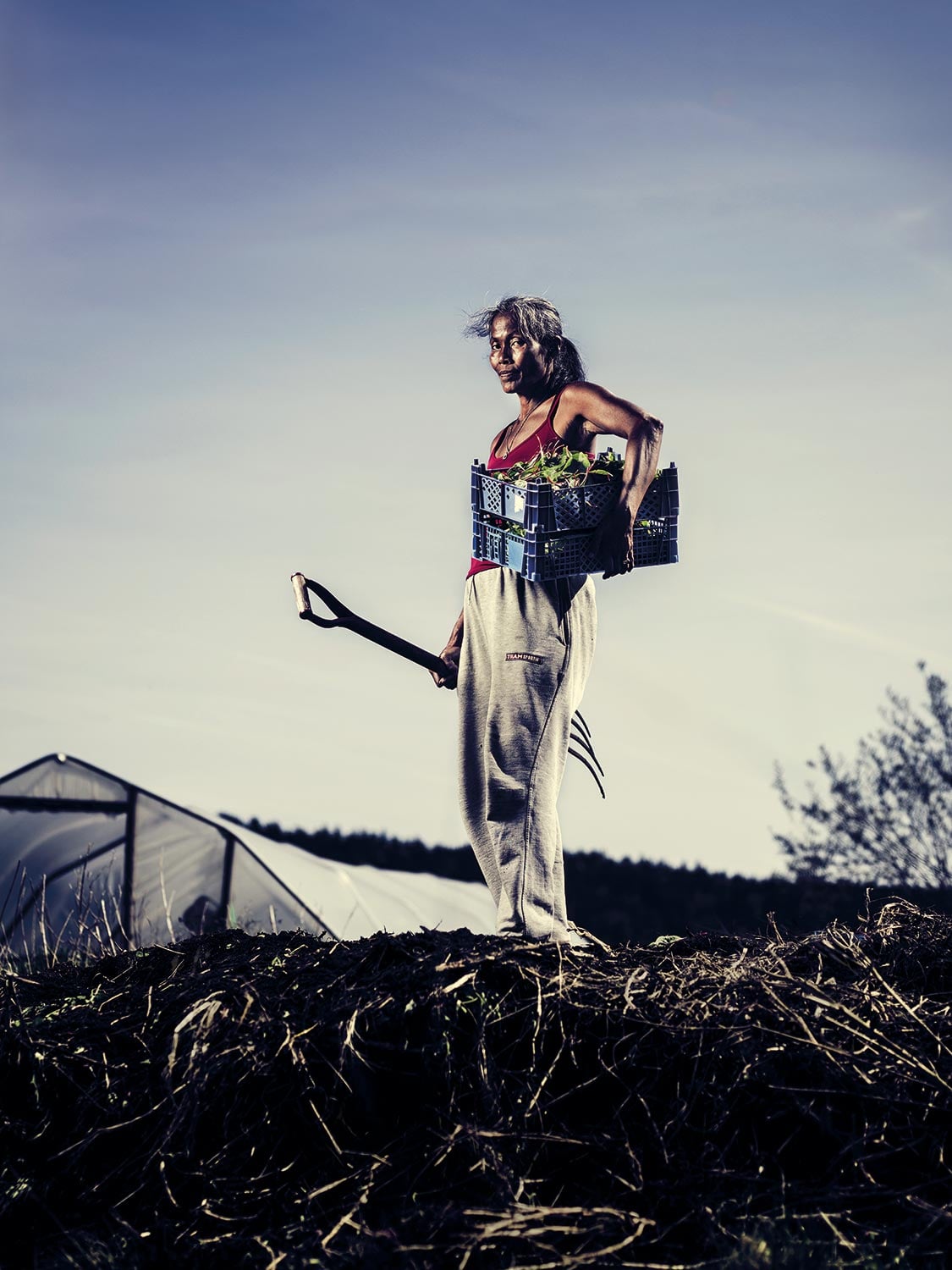
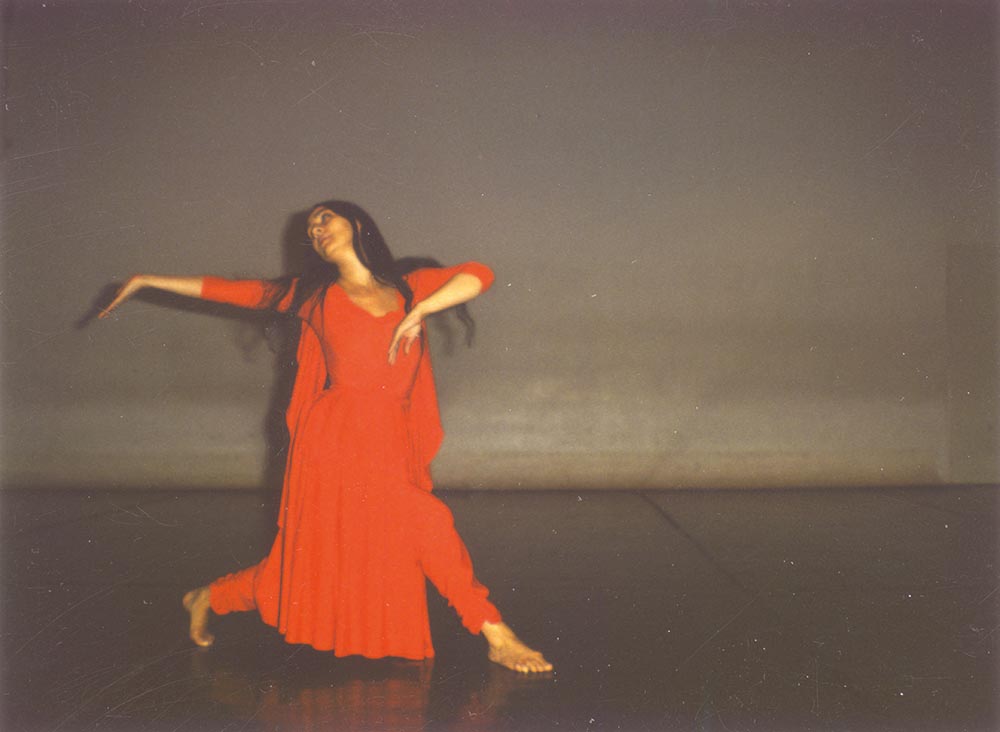
Culture is never static. It changes as people practise it, share it and pass it on. What holds significance for one generation may take on a different meaning for the next. Traditions can blend with new influences, adapt to new ways of life, and yet remain important.
In Our Lives tells the story of Asian cultural heritage that lives on in Sweden – not as something unchanging, but as something shaped by the people who carry it forward.
We invite you to discover these stories and encounter a cultural heritage that continues to live, change and unite
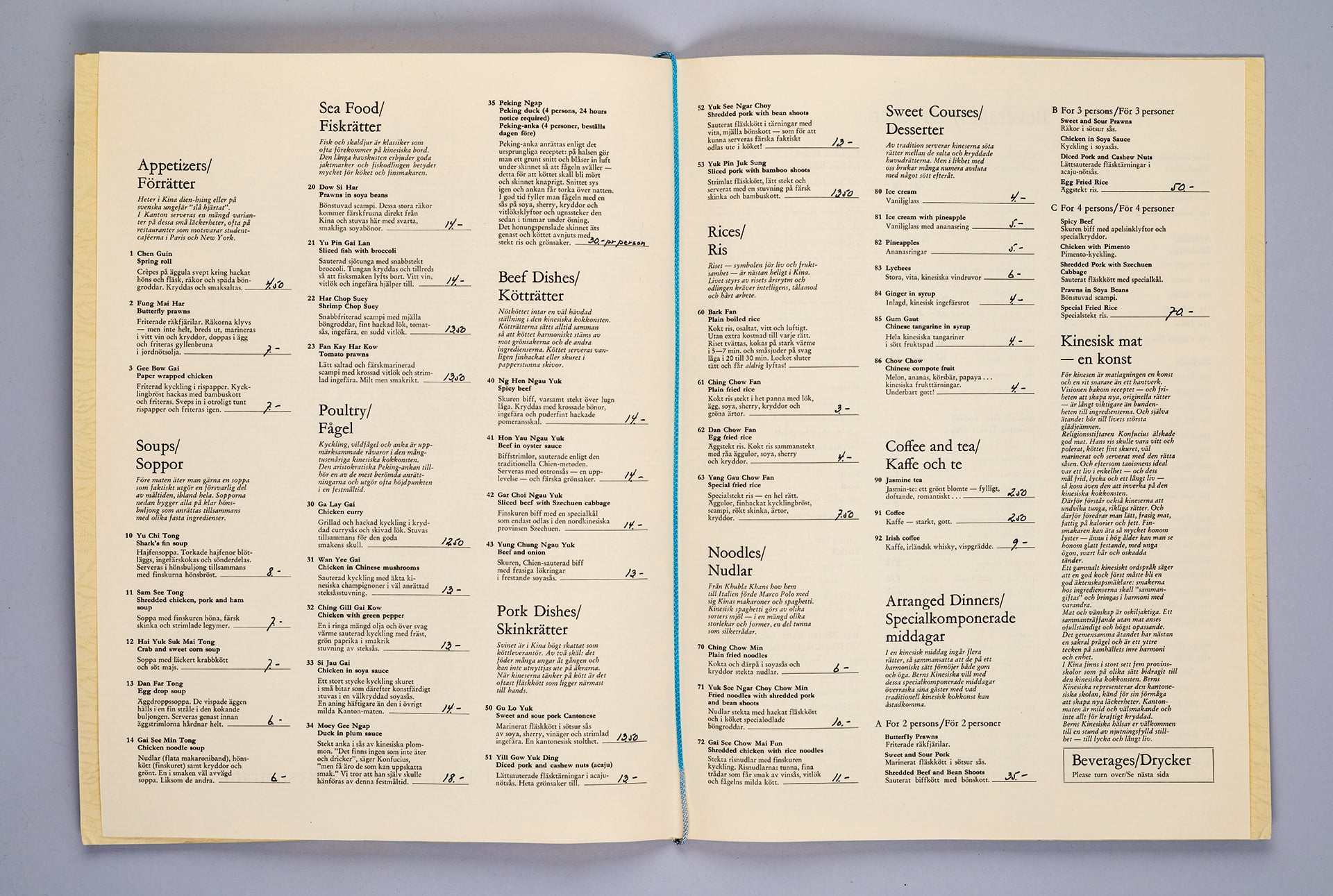
Restaurant menu from Berns Chinese restaurant. 1940s. Item number: EM 2024.04.0001
The restaurant "Chung Kuo Lou", or "Berns Chinese Restaurant", opened on 23 February 1944, marking the arrival of Sweden’s first fine-dining Chinese restaurant. Berns Chinese Restaurant aroused great curiosity in Sweden, and there was a great deal of coverage of the restaurant in the daily press. The cover of the restaurant’s menu was designed and printed in Hong Kong, before being supplemented with menu pages in Sweden.
Like the vast majority of Chinese restaurants established in the West, Chung Kuo Lou served dishes from Cantonese cuisine, or Yue cuisine – one of China’s eight regional cuisines. The menu features dishes such as pork in sweet-and-sour sauce, spring rolls, fried rice and duck in plum sauce – Cantonese dishes that are now well known to the general public but which were a novelty in 1940s Sweden.
A copy of the menu is held in the collections of the Museum of World Culture and is on display in the exhibition.
In the exhibition, you can also learn about the story of the Chinese chef Dai-Tsi-Tay, who worked at "Chung Kou Lou".