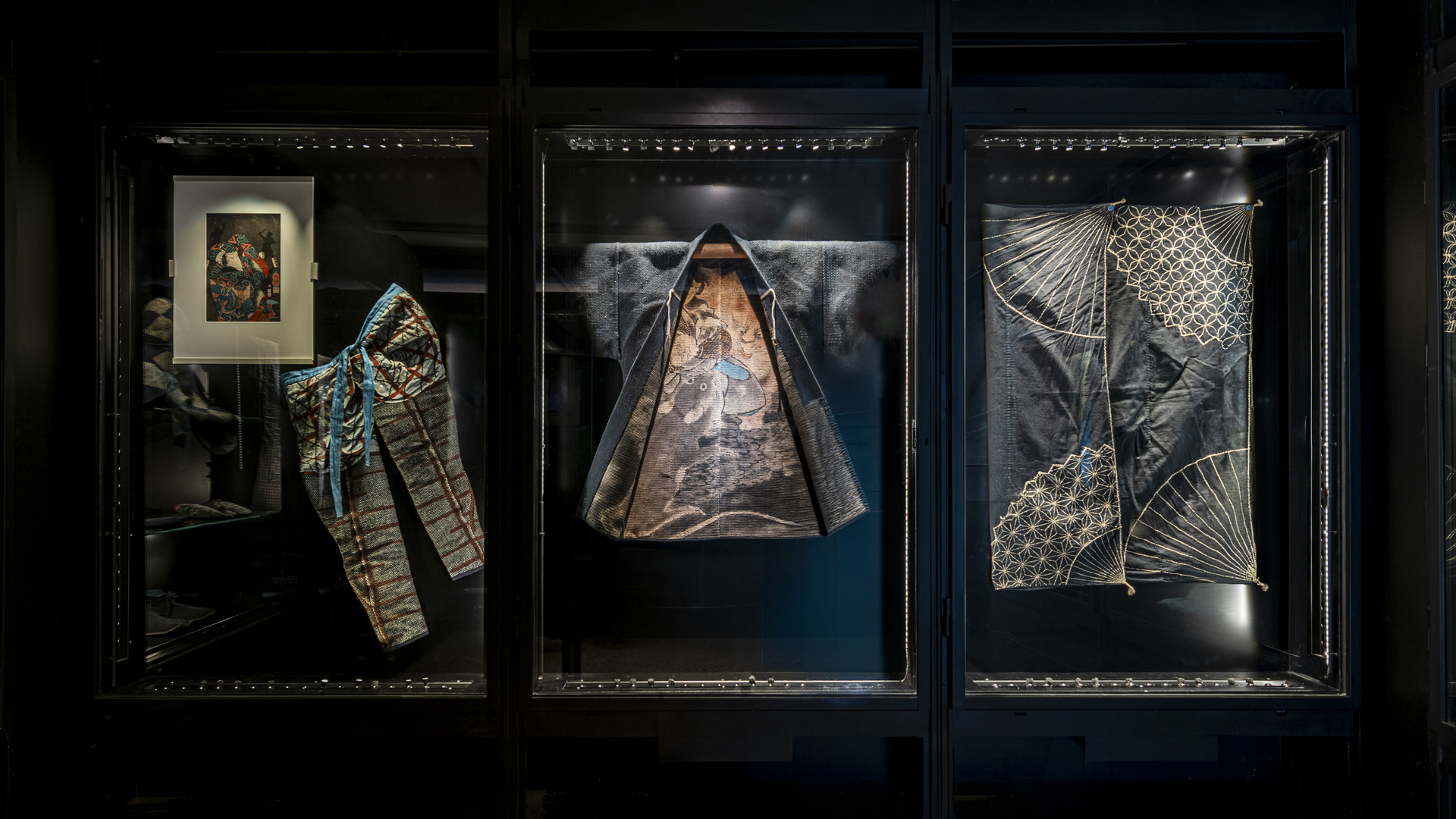
The objects come from a variety of contexts. Amongst them are boro textiles – textiles that have been mended and reused over a long period of time – but also garments designed for physical labour, where the stitching has served an important function. One example is a garment worn by a Japanese firefighter, whose clothes were soaked in water before firefighting operations.
The textiles feature sashiko, a Japanese technique involving simple running stitches used to mend and reinforce fabric. On some garments, the stitches cover almost the entire surface. Layers of fabric and seams bear witness to a long life of use, mending and reuse.
Boro is primarily associated with conditions of poverty in northern Japan, where clothes and household textiles could be used for generations. New pieces of fabric were sewn together as the material wore out, and the garments changed over time. Each mend thus bears traces of its previous use and of the person who carried it out.
Today, these textiles have been given a new lease of life as collector’s items and a source of inspiration for artists and fashion designers. The exhibition also features examples of garments from a Japanese fashion company which, during the 2010s, drew inspiration from the aesthetic and history of boro textiles.